

Small businesses often struggle with inconsistent revenue because their pipeline depends on referrals and word-of-mouth. When the referrals dry up, so does the cash flow. The fix isn’t a bigger marketing budget, it’s a smarter prospecting system.
Local B2B leads are business contacts filtered by geography and industry, think HVAC companies in Phoenix or dentists in Austin, rather than by funding rounds or company size. For small businesses that serve specific cities or service areas, targeting locally beats broad national outreach every time. You get higher response rates, better-fit clients, and faster pipeline.
This guide walks through exactly where to find local B2B leads, how to build a clean list, what mistakes to avoid, and when it makes financial sense to stop doing it yourself.
Key Takeaways
Local B2B leads combine geographic targeting with industry focus, producing better outreach results than generic national databases
Free sources like Google Maps, Chamber of Commerce directories, and LinkedIn local filters are solid starting points for small businesses
A clean, targeted list of 100–200 businesses outperforms a bloated list of thousands every time
Generic messaging without local context is one of the most common reasons local outreach fails
In this article
- What Are Local B2B Leads and Why Do They Matter for Small Businesses?
- Where to Find Local B2B Leads Without Paying for a Big Database
- How to Build a Clean Local B2B Lead List Step by Step
- The Most Common Mistakes That Kill Local Prospecting Results
- When It Makes Sense to Outsource Your Local B2B Lead Generation
- The Bottom Line
- Frequently Asked Questions
What Are Local B2B Leads and Why Do They Matter for Small Businesses?

Local B2B leads are business contacts defined primarily by geography such as a city, ZIP code, or service territory, combined with a specific industry. Rather than filtering prospects by employee count or annual revenue like enterprise databases do, local B2B prospecting starts with location first. “Roofing contractors in Miami” or “commercial cleaners in Chicago” are the types of searches that drive this approach.
For small businesses operating within a defined service area, this geographic specificity directly improves pipeline quality. According to research from HubSpot, personalized outreach consistently outperforms generic messaging, and nothing personalizes faster than referencing a prospect’s city or neighborhood. A pitch that says “I help dentists in Austin grow their patient referrals” lands far better than “I help dental practices nationwide.”
Most small businesses rely heavily on referrals to survive, which creates unpredictable feast-or-famine revenue cycles. Systematic local lead generation replaces that uncertainty with a consistent, repeatable flow of qualified prospects. Instead of waiting for the phone to ring, you’re building a pipeline that you control, on a timeline that works for your business.
The combination of location and niche targeting also produces better-fit clients. A prospect who operates two miles from your office and fits your ideal customer profile is far more likely to close, stick around, and refer others than a cold contact pulled from a national database who has no connection to your market.
Where to Find Local B2B Leads Without Paying for a Big Database
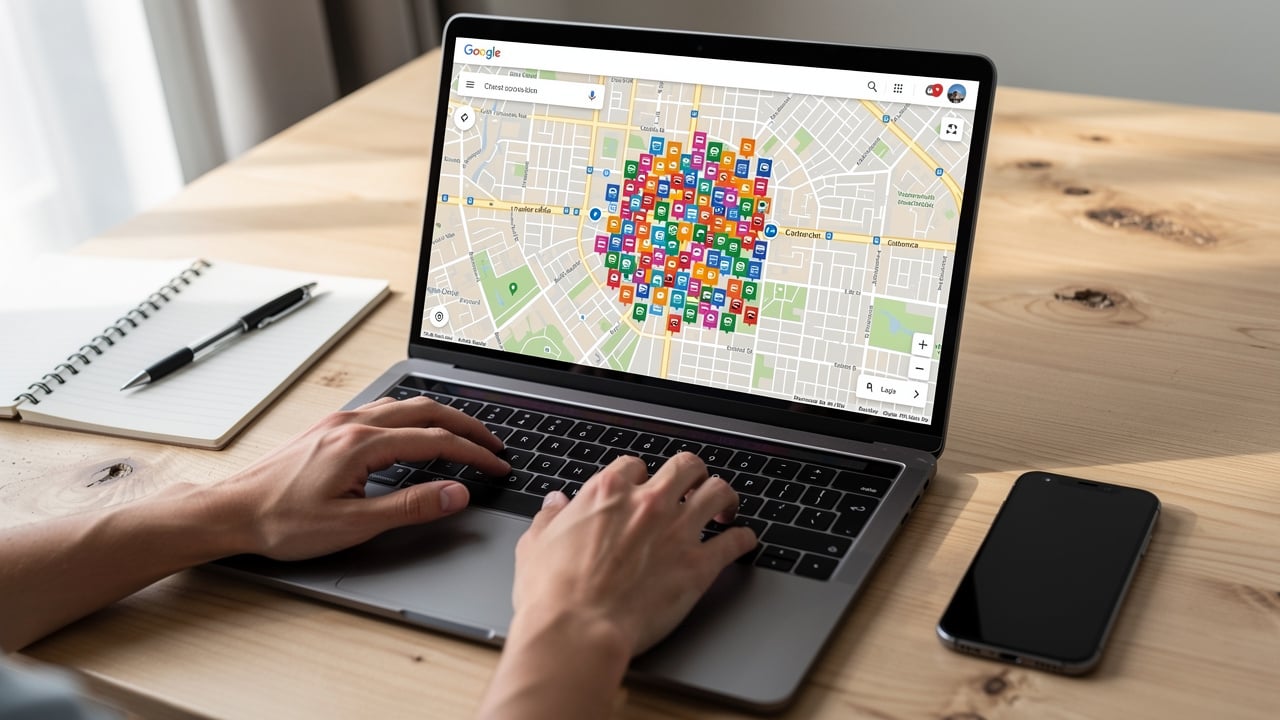
Finding local B2B leads doesn’t require an expensive enterprise subscription. There are solid free and low-cost sources that any small business can tap immediately, and a few purpose-built tools worth knowing about when you’re ready to scale.
Free and low-cost sources to start with today:
Google Maps is the fastest zero-cost option. Search “plumbers in Houston” or “med spas in Dallas” and you’ll get business names, phone numbers, addresses, and sometimes websites directly in the results. It works well for small lists but becomes impractical past 50–100 contacts because the manual copy-paste process is painfully slow.
Google Business Profile directories and Yelp for Business surface local businesses with contact details, category tags, and customer reviews — useful for both list-building and pre-call research.
Local Chamber of Commerce directories are underused and underrated. Most Chambers publish searchable member directories organized by industry, giving you a pre-vetted list of local businesses that are actively investing in their community.
LinkedIn local filters let you search by location and industry simultaneously. It’s especially effective for professional services and B2B SaaS, where decision-makers maintain active profiles.
Industry associations and local business journals often publish annual lists of top businesses by niche and metro area — roofing companies, dental practices, logistics firms. These lists are free and remarkably targeted.
Referral loops from existing clients are frequently overlooked. A client in one niche often knows peers in adjacent ones. A warm introduction from a happy customer beats a cold list every time, and costs nothing.
“The best lead is a referred one, but the second best is a well-researched local prospect who already trusts businesses in their own backyard.” — Common wisdom among B2B sales teams who work local markets
Purpose-built local lead tools change the math when you need to scale. Platforms like Targetron and Lead Atlas let you search by city, ZIP code, and industry category simultaneously, then export verified contact data, including email, phone, and physical address, in CSV or CRM-ready formats. Pricing starts around $15 per 1,000 records, which makes them accessible for businesses at any budget stage.
Generic B2B databases like Apollo, ZoomInfo, and LinkedIn Sales Navigator are built for enterprise firmographic filtering, which is great for finding the VP of Sales at a 200-person SaaS company, but consistently weak for hyper-local prospecting where you need ZIP code-level precision for small independent businesses.
How to Build a Clean Local B2B Lead List Step by Step
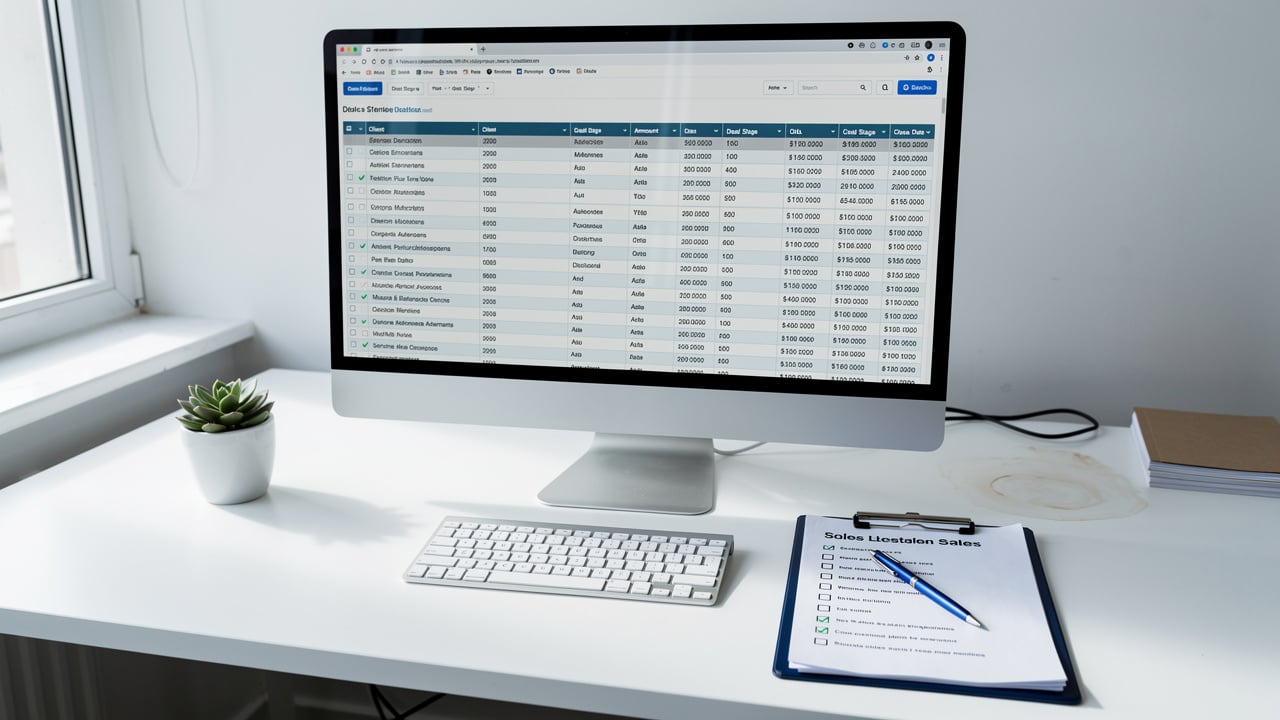
A high-quality local lead list doesn’t happen by accident. Skipping any step in the process usually means wasted outreach budget and low response rates. Here’s the six-step framework that works.
Step 1 — Define your target niche precisely. “Roofing contractors” outperforms “construction.” “Dentists” outperforms “healthcare.” The more specific your niche, the sharper your messaging and the higher your conversion rates.
Step 2 — Choose a tight geographic scope. One city or a cluster of ZIP codes beats a statewide list. A focused list of 200 businesses in your actual service area outperforms 2,000 loosely matched contacts spread across multiple states.
Step 3 — Run your search using a local lead tool or directory. Use Google Maps, a Chamber directory, or a tool like Targetron to pull businesses matching your niche and geography.
Step 4 — Collect complete contact data for each business. Incomplete data renders leads useless. For each business, gather:
| Data Field | Why It Matters |
|---|---|
| Business Name | Required for every personalized message |
| Email Address | Primary channel for cold outreach |
| Phone Number | Follow-up calls and warm outreach |
| Website URL | Deeper research and message customization |
| Physical Address | Confirms location and service area fit |
| City / ZIP Code | Territory segmentation |
| Industry Category | Campaign targeting and messaging |
| Owner / Contact Name | Increases open and response rates |
Step 5 — Segment by niche and location. Austin dentists need different messaging than Miami roofing contractors. Proper segmentation lets you personalize at scale without rewriting every individual email.
Step 6 — Audit and clean the list before outreach. Remove duplicates, verify businesses are still operating, and confirm every contact falls within your service area. A smaller, clean list of 200 verified businesses outperforms a bloated list of 2,000 unverified contacts, every single time.
The Most Common Mistakes That Kill Local Prospecting Results
Even with the right tools and a solid list, specific mistakes consistently sabotage local outreach. Knowing what they are is half the battle.
Targeting too broad a geographic area dilutes your message and wastes budget. If you only serve one city, your list should reflect exactly that. Casting a wider net doesn’t produce more leads, it produces worse ones.
Mixing unrelated industries in one campaign forces you into generic messaging. Dentists and roofing contractors have entirely different pain points, objections, and buying cycles. Keeping industries separate lets you speak directly to each audience.
Using generic messaging without local context is one of the most costly missed opportunities. “I help HVAC companies in Phoenix increase commercial contract volume” outperforms “I help HVAC companies grow” by a significant margin. This is a free upgrade available to any business right now.
Collecting incomplete contact data — a name without an email, or a phone number without a verified address, renders leads unusable. Always collect multiple contact points per business.
Skipping the pre-launch list audit leads to bounced emails, disconnected numbers, and outreach to businesses that have closed. A 30-minute quality check before you launch protects your sender reputation and saves significant time downstream.
When It Makes Sense to Outsource Your Local B2B Lead Generation

Building an in-house Sales Development Representative function is a legitimate long-term strategy, but it’s a slow one. Hiring, onboarding, and ramping an SDR typically takes three to six months and costs $60,000–$100,000 or more per year in salary, benefits, tools, and management overhead, according to Glassdoor. For small businesses that need pipeline now, that timeline simply isn’t realistic.
Done-for-you services like Quick Calls handle the entire outbound process including cold calling, script development, appointment setting, and real-time reporting, using trained, US-based callers who work across all time zones. The proprietary H2H (Human-to-Human) Method prioritizes authentic conversations over robotic scripts, which matters especially in local B2B markets where trust and relationships drive decisions.
Plans start at $695/month with no long-term contracts, making it one of the more accessible options for businesses testing a local market before committing to a larger sales infrastructure. Quick Calls has run thousands of campaigns across 50+ B2B verticals, including SaaS, manufacturing, logistics, and healthcare.
The decision point is straightforward: if consistent outreach isn’t happening because of time or capacity constraints, outsourcing removes that bottleneck immediately. You get an active local pipeline within days of onboarding, not months.
The Bottom Line

Finding local B2B leads comes down to a simple, repeatable system. Define your niche precisely, choose a tight geographic scope, build a clean list from free sources like Google Maps and Chamber directories or purpose-built tools like Targetron, and personalize your messaging with local context. Avoid the common pitfalls like broad targeting, mixed industries, generic copy, and shared lead platforms, and your outreach will perform measurably better.
Start small: a focused list of 100–200 verified businesses in a single niche is enough to begin. Launch a three-channel sequence using cold calling, cold email, LinkedIn, on a consistent weekly cadence. If time is the bottleneck, explore outsourced options like Quick Calls to keep outreach running without adding headcount. Predictable local pipeline is a system. Build it once, refine it over time, and it compounds.
Frequently Asked Questions
What Is the Fastest Free Way to Find Local B2B Leads?
Google Maps is the fastest zero-cost starting point, search by industry plus city and you’ll get business names, phone numbers, and addresses instantly. Chamber of Commerce directories and local business journals are strong secondary sources. Manual research works well for small lists but becomes impractical at scale, where purpose-built tools save significant time.
How Many Local Leads Do I Need Before Starting Outreach?
A focused, verified list of 100–200 businesses in a single niche and geography is enough to begin. Quality always outweighs quantity in local prospecting. Starting small lets you test your messaging, identify what resonates, and refine your ideal customer profile before investing in a larger campaign.
Should I Use LinkedIn or Cold Email for Local B2B Outreach?
Both work, and a multi-channel approach — cold call, cold email, plus LinkedIn — consistently outperforms any single channel alone. LinkedIn tends to be more effective for professional services and B2B SaaS; cold email and cold calling perform better for trade and service businesses. Start with whichever channel your target prospects use most actively.
How Do I Know If Outsourcing Local Lead Generation Is Right for My Business?
If consistent outreach isn’t happening due to time constraints, outsourcing removes that bottleneck immediately. Compare the cost of an in-house SDR ($60K–$100K+/year with a three-to-six-month ramp) against a service like Quick Calls starting at $695/month with no long-term contract. Outsourcing is best suited for businesses that need qualified pipeline now, not in six months.