

If you’re a small to medium-sized business owner, entrepreneur, founder, account executive, or just getting started in sales development, you’ve likely felt the squeeze: inboxes are saturated, ad costs keep climbing, and prospects are harder than ever to engage. That’s why b2b direct mail is having a moment. When done right, it’s a tactically smart, surprisingly affordable, and highly personal way to get in front of the exact people who matter—without getting lost in a sea of unread emails and ignored ads.
Think of b2b direct mail as your opportunity to make a tangible first impression. It combines the precision of modern data with the tactile presence of something a prospect can actually hold. For small businesses, especially those competing against larger, better-funded brands, that physical presence can level the playing field. Instead of shouting louder online, you show up smarter offline—with a tailored offer, a useful leave-behind, or a creative hook that opens doors.
What Is B2B Direct Mail (and Why It Matters Now)
B2B direct mail is the practice of sending physical mail—postcards, letters, kits, or packages—to business contacts to drive engagement, meetings, or sales. Unlike consumer-focused mailers, b2b direct mail is purpose-built for company decision makers, influencers, and end users across departments like IT, operations, HR, finance, or marketing. The difference is precision: campaigns are small-batch, hyper-targeted, and highly personalized to the account, use case, or job role.
Why now? Digital fatigue is real. People delete emails on their phones in seconds, and ad blindness is common. But a relevant package that lands on a desk—or a postcard that ties directly to a need—gets attention. It also feels more human. You’re signaling, “This is worth your time,” and that can reset the buyer-seller dynamic in your favor.
Key Benefits of B2B Direct Mail for Small Businesses
B2b direct mail delivers advantages that are hard to replicate digitally. First, it cuts through noise. Physical mail has a natural edge because it encounters less competition and engages more senses. That tactile experience can boost recall and brand affinity, especially when your message is relevant and clear.
Second, it pairs beautifully with data and personalization. You can micro-segment by industry, role, company size, or intent signals (like technology used or recent hiring). Variable data printing lets you swap headlines, images, and calls to action at scale. A CFO sees value-based ROI; a VP of IT sees security and uptime; an HR leader sees change management and adoption—each piece crafted for the pain that matters most.
Third, it’s measurable. Digital integrations—unique QR codes, personalized URLs (pURLs), and trackable phone numbers—give you concrete attribution. Tie a specific mailer to a booked meeting, a demo request, or a pipeline event, and you can see whether b2b direct mail is moving the needle.
Fourth, it fuels pipeline creation and deal velocity. Use b2b direct mail as a door-opener for cold accounts, as a mid-funnel nudge to move opportunities forward, or as a renewal and expansion play with current customers. In each case, the medium supports a different sales motion with a physical artifact that reinforces the message.
Where B2B Direct Mail Fits in the Funnel
Top of Funnel (Prospecting)
Direct mail shines as a pattern interrupt. A tight list of high-fit accounts receives a short, compelling piece—like a postcard or a simple box with a note and relevant leave-behind—paired with a clear CTA to book time. SDRs and AEs can then reference the mailer in their follow-up emails and calls, increasing response rates and familiarity.
Account-Based Marketing (ABM)
For founder-led sales or small teams running ABM, b2b direct mail helps you land and expand. Send tailored pieces to specific buying committee members with role-specific messaging and a shared theme. When three people at the same company reference the same campaign, your brand gains internal momentum.
Event Strategies
Use b2b direct mail to drive event registrations, in-person booth traffic, or post-event follow-ups. Pre-event, mail a teaser and VIP invitation; during the event, offer on-site pickup of a gift if they scan a QR; post-event, send a summary kit with next steps and a limited-time offer. This thread connects physical and digital touchpoints around a time-bound moment.
Mid-Funnel Conversion
Deals can stall. A personalized letter from the founder, a one-pager tailored to the prospect’s requirements, or a small kit that maps your solution to their stated priorities can rekindle momentum. Reference previous conversations to make it feel bespoke, then simplify the next step to reduce friction.
Customer Marketing
Renewals, upsells, and advocacy programs benefit from thoughtful mailers—onboarding kits, milestone gifts with a product tip sheet, or referral invitations with a clear incentive. Small businesses often outperform here because they can be more personal and timely, translating into retention and expansion.
Popular B2B Direct Mail Formats (and When to Use Them)
Different objectives call for different formats. Use this quick comparison to deploy b2b direct mail without guessing.
| Format | Best for | Personalization Level | Typical Cost (ballpark) | Pros | Considerations |
|---|---|---|---|---|---|
| Postcard | Broad outreach, event invites | Low–Medium (headline, CTA, pURL) | $0.60–$1.50 | Fast, affordable, eye-catching | Less space for story; may be filtered by mailrooms |
| Letter in envelope | Executive audiences, thoughtful pitches | Medium–High (custom copy, merge fields) | $1–$3 | Feels personal, easy to scan | Needs strong opener and clear CTA |
| Self-mailer (folded) | Product education, mid-funnel | Medium (sections, visuals) | $1.50–$3 | More room for detail; still affordable | Requires tight design to stay readable |
| Dimensional package/kit | High-value accounts, ABM, stalled deals | High (role-specific inserts, gift) | $15–$40+ | High attention, memorable | Use selectively; check gift policies |
| Welcome/onboarding box | New customers, brand building | High (account-specific materials) | $20–$60+ | Enhances experience and retention | Best for LTV-focused plays |
Costs vary by quantity, materials, and shipping method. For small businesses, start small. A pilot of 50–200 pieces can validate your approach before you scale.
Targeting and Lists: The Engine Behind Performance
The secret to b2b direct mail isn’t the paper—it’s the list. Define your ideal customer profile (ICP) by firmographics (industry, size, region), technographics (tools/platforms), and buying triggers (hiring patterns, new locations, compliance changes). Then map the buying committee by role: decision maker, influencer, user, and budget owner. Sending the right message to the right person is half the battle.
Where do lists come from? Begin with your CRM and enrichment sources to validate addresses and titles. For net-new contacts, use reputable providers and always verify corporate addresses. Avoid blasting to generic recipients like “Current Resident” or shared inboxes; you want named individuals. The more specific your list, the more relevant your b2b direct mail will be—and the better your ROI.
Personalization That Feels Human (Not Creepy)
Great b2b direct mail feels thoughtful, not invasive. Use information prospects expect you to know—industry context, public company news, and role-specific pain points. Reference a known initiative: “Scaling a field sales team across three regions is tough; here’s a 90-day playbook we printed for you.” Variable data printing lets you customize headlines, subheads, imagery, and inserts at scale.
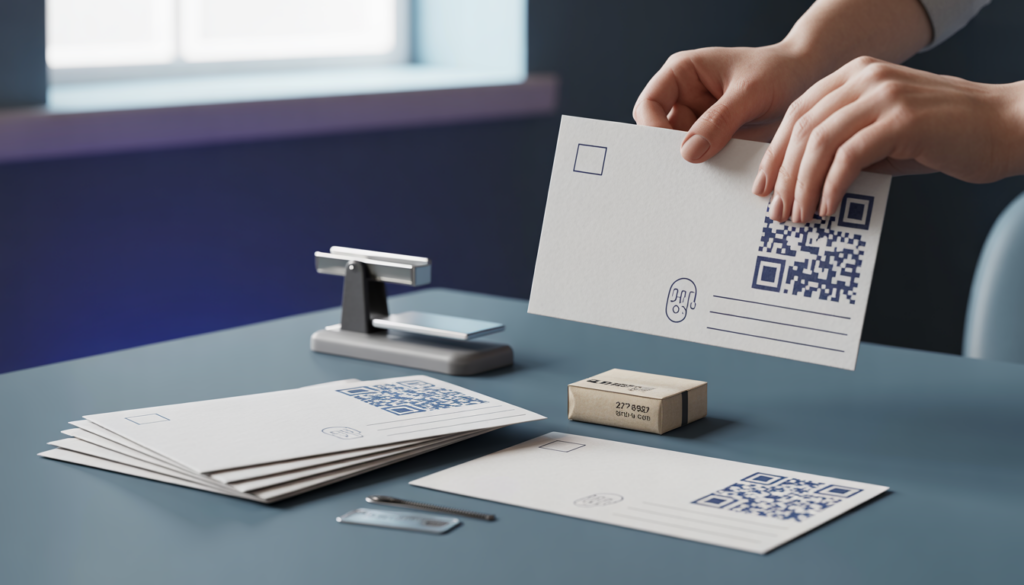
Add smart tracking without overdoing it. A personalized URL (pURL) or QR code that leads to a role-specific landing page shows you did your homework and makes it easy to engage. A unique code or phone number ties responses to the campaign. Keep the layout clean—clarity and simplicity win.
Orchestrating B2B Direct Mail With Your Digital Cadence
B2b direct mail really shines when it’s part of a coordinated sequence. Use your CRM or sales engagement platform to trigger mailers based on milestones—new MQL, qualified account added to a sequence, opportunity stagnated, or renewal window approaching. Surround the physical touch with complementary digital touches: a pre-delivery “heads up” email, a follow-up call or LinkedIn message referencing the mail, and a reminder email with the same CTA and landing page.
This multichannel approach creates familiarity and reduces friction. Your prospect sees the theme consistently across channels, which builds recognition and trust. Keep messaging tight and consistent: one core pain point, one sharp value statement, and one next step.
Creative, Copy, and CTAs That Convert
Treat your creative like a product: it must do a job. Your headline should promise a specific outcome (“Cut quarterly close time by 30%”) or agitate a core pain (“Too many no-shows? Fix your demo-to-win ratio”). Subheads and short body copy connect your claim to proof—case studies, outcomes, or a data point. Close with a single, unmistakable CTA: “Book a 15-minute walkthrough,” “Get the playbook,” or “Claim your benchmark report.”
When sending kits, pair a useful leave-behind with a message that makes it relevant. A highlighter and a “highlight your cost savings” one-pager. A coffee kit and “let’s brew a plan to consolidate your tools.” Avoid random swag. Choose items tied to your narrative so the physical object amplifies the value proposition.
Budgeting, ROI, and What to Measure
Start with unit economics. Estimate your cost per piece and your likely conversion path: response rate to booked meetings, meetings to qualified opportunities, and opportunities to revenue. Because b2b direct mail has higher per-touch costs than email, you’ll measure success differently—often on cost per meeting or pipeline per dollar rather than raw response volume.
Key metrics include:
- Delivery rate (valid addresses, successful delivery)
- Response rate (scans, pURL visits, replies, call-ins)
- Meeting/booked rate
- Pipeline created (total and per account)
- Win rate and average deal size influenced
- Cost per meeting and pipeline generated per $1 spent
For small businesses, a simple approach works: track contacts mailed, meetings booked, and deals opened from those contacts within a defined window. Use unique landing pages or codes to attribute clearly. Over a few cycles, you’ll see which segments, formats, and messages pay off.
Compliance, Ethics, and Deliverability
A few practical guardrails will keep your b2b direct mail effective and above board. Respect corporate gift policies—many organizations cap gifts at a specific value. When in doubt, choose modest, useful items or skip the gift and send value-rich content. Address your mail clearly to a named recipient with their title and company. If you’re sending to shared mailrooms or buildings, include a department to improve routing.
Also, be mindful of regulated industries and sensitive data. Don’t include confidential information or anything that could be perceived as invasive. A professional tone and clear business purpose go a long way toward acceptance and engagement.
Sustainability Considerations
Sustainability matters to many buyers and brands. Use recycled or FSC-certified paper stocks, opt for minimal packaging, and reduce plastic where possible. Fewer, better-targeted pieces are inherently more sustainable than mass blasts. You can also include a small note about your materials or provide a digital alternative via QR to demonstrate thoughtfulness without grandstanding.
How to Launch Your First B2B Direct Mail Campaign
- Define the objective and audience. Decide whether the goal is booked meetings with 50 ICP accounts, post-event follow-ups, or renewing key customers. Write a one-sentence brief that nails the who and the desired next step.
- Build and validate the list. Pull named contacts (decision makers and key influencers) and verify titles and addresses. Keep it tight—quality beats quantity.
- Craft the offer and CTA. Choose a single, low-friction next step. If you’re asking for a meeting, anchor it to a benefit and a time-bound incentive (a limited audit or “first 10 accounts” perk).
- Choose the format. For door-opening, start with a letter or postcard. For ABM or stalled deals, consider a small kit. Match your spend to the account value and stage.
- Write and design. Draft role-specific copy and a headline that promises a clear outcome. Keep layouts clean. Use a personalized QR and a short pURL, both pointing to a matching landing page.
- Set up tracking. Create unique URLs, QR codes, or call tracking numbers. Add campaign fields in your CRM for attribution.
- Plan the sequence. Schedule pre-delivery and post-delivery touches. For example: day -1 email, day 0 mail drop, day +2 call referencing the piece, day +4 LinkedIn note, day +6 reminder email with the same CTA.
- Print and fulfill. Choose a reliable printer/fulfillment partner or keep it in-house for small runs. Review proofs and test a small batch to yourself first.
- Launch and monitor. Watch delivery and early responses. Be ready with tailored talk tracks when prospects respond.
- Analyze and iterate. Compare segments, formats, and messages. Double down on what worked; tweak what didn’t. Rinse and repeat with a new list and refined creative.
Common Mistakes to Avoid
- Sending too broadly. Mass mailers waste money. Stay laser-focused on ICP accounts and roles that can actually say “yes.”
- Weak message–market fit. If your headline could apply to any company, it’s not specific enough. Tie it to the recipient’s role, industry, or current initiative.
- Too many CTAs. Pick one next step and make it unmistakable. Multiple paths create friction and indecision.
- No follow-up plan. B2b direct mail without coordinated follow-ups leaves response on the table. Build the sequence before you ship.
- Over-gifting. Flashy, expensive items without narrative relevance can backfire and violate policies. Value > vanity.
Advanced B2B Direct Mail Plays for Small Teams
Leverage triggers to elevate timing. Mail when a target account hires a new leader, opens a new office, raises funding, or posts a relevant job. Timing amplifies relevance and increases conversion odds.
Use “choose-your-own-path” landing pages. A single QR can route CFOs to ROI content, IT to security docs, and operators to workflows based on a quick self-selection. This personalizes the experience without bloating your printed piece.
Pair with direct response hooks. Offer a short, high-value assessment, a benchmark report, or a mini-workshop. Tangible deliverables trump generic “let’s chat” and justify the ask for time.
Co-market with a complementary vendor. Share costs and reach (with consent) by designing a dual-branded b2b direct mail campaign that speaks to a shared ICP. It’s a smart way to unlock larger accounts together.
Deploy founder letters at key moments. A short, sincere note from the founder—especially in small businesses—can create trust and signal commitment. Use for renewals, major releases, or big prospects.
How Many Pieces Do You Need?
For most small business pilots, 50–200 pieces is enough to learn quickly and affordably. Choose two segments and two creative variants so you can compare results. If your average deal size is modest, lean on postcards and letters; if it’s larger or enterprise-focused, reserve a portion for dimensional kits targeted at the top 10–20 accounts.
Practical Creative Tips You Can Use Today
- Put the CTA above the fold so it’s instantly visible.
- Use a big, benefit-led headline and one supporting proof point.
- Keep paragraphs short and scannable; bold key phrases for emphasis.
- Match the landing page design and copy to the mailer—continuity builds trust.
- Include a clear, human sign-off with a real name, role, and direct contact.
Summary: The Bottom Line on B2B Direct Mail
B2b direct mail gives small businesses a high-impact, human channel that complements digital outreach and helps you win attention with the buyers who matter. It works because it’s targeted, tactile, and measurable—and because it respects your audience’s time. Whether you’re a founder doing the first 20 sales yourself, an account executive breaking into strategic accounts, or a new SDR trying to book your first meetings, this channel can help you stand out without shouting.
Start narrow. Pick a sharp use case, a short, clean message, and a list of high-fit accounts. Build a simple cadence around your mailer, track the results obsessively, and reinvest in what works. With each cycle, you’ll sharpen your ICP, creative, and timing—and b2b direct mail will become a repeatable growth lever in your revenue mix.
FAQ: B2B Direct Mail for Small Businesses
How much does b2b direct mail cost for a small business?
Costs vary by format and volume. Postcards and letters often range from about a dollar to a few dollars per piece, while dimensional kits can run $15–$40+ each. Start with a small pilot, match spend to expected deal size, and measure cost per meeting and pipeline generated.
How do I track ROI from b2b direct mail?
Use unique QR codes, personalized URLs, and campaign fields in your CRM. Attribute responses to the campaign, monitor booked meetings and pipeline from mailed contacts, and compare against control groups or prior periods. Over time, optimize segments and creative to reduce cost per meeting.
Will b2b direct mail work for my industry?
It can, provided you target the right roles and speak to specific pains. Industries with clear compliance, operational, financial, or technical needs often respond well when the message is concrete and practical. Test small, learn fast, and tailor your approach to your market’s norms.
What should I send if I’m on a tight budget?
Start with a letter or postcard that’s role-specific and benefit-led. Pair it with a dedicated landing page and a short follow-up sequence. You’ll get most of the channel’s advantages without the higher costs of kits or packages.
How many times should I mail the same contact?
Quality beats frequency. One highly relevant piece followed by coordinated digital touches often outperforms multiple generic mailers. If you remail, change the angle—new proof, a fresh offer, or a timely trigger—so each touch adds value rather than repetition.