

Most small sales teams hit the same wall. One quarter goes well because a single rep closes everything, then the next quarter stalls because that rep leaves or gets busy. Continuous sales improvement fixes this by replacing guesswork with a steady, repeatable practice built into how the team works every week. This article answers a question many small sales teams ask themselves: how can a team with limited headcount keep improving its sales performance without adding software or extra people?
The short answer is a weekly learning loop that tracks a handful of numbers, reviews real calls, tests one small change at a time, writes down what happens, and shares the result with the whole team. Build that habit and performance gains stop depending on one star closer and start coming from the system itself. The rest of this guide walks through that loop step by step, plus how to build a sales team learning culture that actually sticks, and where outside call support can fit in when time or headcount runs thin.
Key Takeaways
Continuous sales improvement works as a weekly habit built into normal operations, not a one-time training event or kickoff.
Data and call reviews replace guessing, showing exactly where deals stall and why reps lose them.
Small, specific experiments, one change tested at a time, beat big overhauls that are hard to measure.
Writing lessons down turns one rep’s discovery into knowledge the whole team can use.
Psychological safety is what gets reps to admit what isn’t working instead of hiding it.
In this article
- What Is Continuous Sales Improvement?
- Why Does a Sales Team Need a Learning Culture?
- How to Build the Weekly Learning Loop
- How to Create Psychological Safety for Honest Feedback
- Where Outsourced Call Support Fits Into a Continuous Improvement Culture
- Wrapping Up
- Frequently Asked Questions
What Is Continuous Sales Improvement?
Continuous sales improvement means watching how reps actually sell, testing small changes, and keeping what works, done weekly instead of saved for one big training event. It treats selling skill like a production line, something to adjust often rather than fix once and move on. A single kickoff might spark energy for a month, but those gains usually fade once the novelty wears off.
Research on sales digitization and sales process optimisation shows that adopting a defined, structured sales process measurably improves firm performance, which is why this cycle only works with a baseline, a defined process or calling method everyone follows, because without one there’s nothing solid to measure change against. If every rep handles calls their own way, a manager can’t tell whether a new opening line helped or whether one rep is simply better at talking to strangers. A shared method gives every call the same starting shape, so results can be traced to the approach, not chance.
Why Does a Sales Team Need a Learning Culture?
A sales team needs a learning culture because a written process only works if reps feel safe pointing out where it breaks down. A script can tell a rep what to say, but it can’t make them admit a question falls flat on every call or that an objection response never lands. Without that honesty, the team keeps running a broken play and nobody fixes it.
Teams with a genuine learning culture also adapt faster when buyers change, objections shift, or a new competitor shows up. A rep reciting a script word for word gets stuck the moment a buyer asks something the script never covered. A rep trained to notice, test, and share what works can adjust within days instead of waiting months for someone to rewrite the playbook.
How to Build the Weekly Learning Loop
The weekly learning loop ties together five connected stages, track the data, review the calls, run one experiment, write it down, and share it with the team, so improvement happens every week instead of once a quarter. Each stage feeds the next: the data points to a problem, the call review shows why it’s happening, the experiment tests a fix, and the write-up and team share make sure the lesson sticks. A short weekly rhythm run consistently beats an occasional half-day deep dive that happens once and gets forgotten. Building this loop takes less setup than most teams expect, often just a weekly sales meeting agenda and a shared document to start.
| Stage | What Happens | How Often |
|---|---|---|
| Track the Data | Watch connect rate, discovery-to-demo rate, and stalled deals | Weekly |
| Review the Calls | Score a few recorded calls against a short list | Weekly |
| Run One Experiment | Test one specific change tied to a metric | Weekly |
| Document It | Log what was tried and what happened | Weekly |
| Share It | Highlight one win and one miss in the team meeting | Weekly |
Step 1: Track the Right Data Every Week

Weekly tracking should focus on pipeline-stage metrics that actually move week to week, like connect rate, discovery-to-demo conversion, and how many deals are stalled at each stage. Skip numbers that barely shift in a week, like monthly totals, since they don’t help catch a problem early. A team also needs enough outbound KPI dashboard, roughly 250 or more activities a month, before weekly numbers mean anything beyond random noise.
Step 2: Review Calls as a Team

Reviewing calls as a team sales call review instead of a vague “good job” or “do better.” The key is a sales role play exercises, five to seven criteria at most, since longer lists get abandoned after a week or two. Feedback should be specific and timestamped, something like “your opener ran past 90 seconds” lands far better than “be more confident.”
Have each rep review their own call first before opening the floor to the team or manager. Self-review first stops the session from feeling like a performance trial, and it often surfaces the same issue the manager was about to raise anyway. Once the rep has spoken, teammates can add what they noticed, keeping the tone collaborative rather than corrective.
Step 3: Run One Small Experiment
Running A/B testing outreach each week keeps change manageable and easy to measure, instead of overhauling the whole call flow at once. Pick a single variable to test:
A new opening line
A different way to handle sales objections
One new discovery question
Give whichever one you pick a full week before judging the result.
Keep the experiment tied directly to one of the metrics from Step 1, so the team can tell within days whether it actually helped. If a new opener raises connect rate but a new discovery question doesn’t move demo conversion, that’s useful information either way. Testing one thing at a time also means the team knows exactly what caused the change, instead of guessing which of five new habits made the difference.
Step 4: Document What Worked (and What Didn’t)
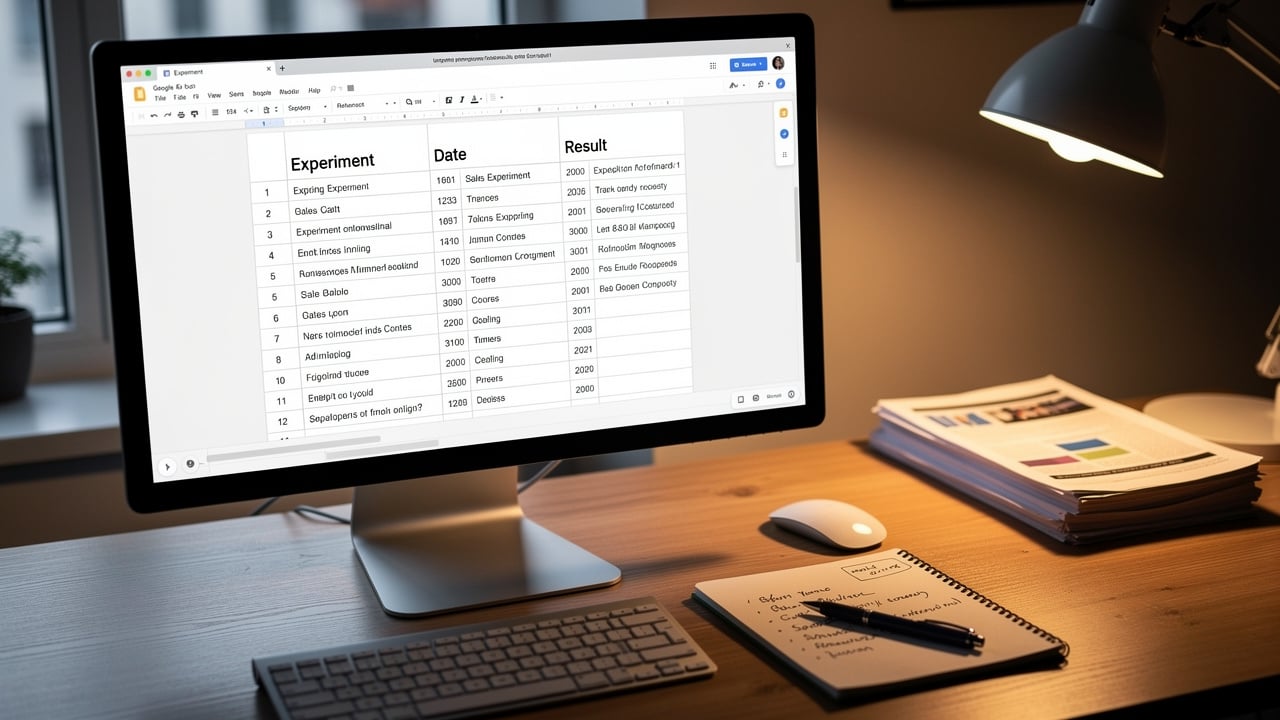
Documenting results is what keeps a team from relearning the same lesson every few months. A simple shared log works fine, three columns for what was tested, what happened, and what to do next, updated right after each week’s experiment wraps up.
Failed experiments deserve a place in that log just as much as wins, because knowing an opening line fell flat saves the next rep from trying the exact same thing six months later. Over time, that log becomes a record of the team’s own trial and error, something a SDR onboarding checklist in an afternoon instead of learning the hard way over months of calls.
Step 5: Share Lessons Across the Team

Sharing lessons across the team is what turns one rep’s discovery into something the whole group benefits from. The weekly team meeting is the natural place for this, with a few minutes set aside to highlight one win and one miss straight from the documentation log.
Rotating who presents each week, rather than always having the manager run through the log, spreads ownership of the habit across the whole team. A rep who shares a failed experiment one week is more likely to speak up again later, which keeps the whole loop honest and the information flowing in both directions instead of only moving downward from management.
How to Create Psychological Safety for Honest Feedback

Psychological safety is what determines whether reps actually use the weekly loop or just go through the motions. A rep who fears blame will hide a bad call instead of flagging it for review, which quietly kills the whole feedback loop before it starts.
keep sales team motivated by asking for input regularly and then visibly acting on it, not simply announcing an open-door policy and hoping reps use it. When a rep raises an objection that keeps coming up and sees the team test a new response the next week, that rep learns speaking up changes things. That proof, repeated often enough, is what makes honesty a habit rather than a risk.
Teams rarely fail at feedback because reps have nothing to say. They fail because nobody showed them that saying it leads anywhere.
Where Outsourced Call Support Fits Into a Continuous Improvement Culture
Outsourced cold calling support fits into a continuous improvement culture when it brings the same structure an in-house team would need anyway: a defined calling method, real call recordings, and a regular review meeting. Quick Calls, a outsource cold calling, builds campaigns around the H2H Method, a structured calling framework that gives every call a consistent shape, so performance has a real baseline to measure against instead of relying on subjective impressions.
Its outcome-based reporting sorts results into appointments set, warm leads, and nurture contacts, and dedicated account managers lead regular review meetings, mirroring the same weekly loop described above. For a team without the headcount to run reviews internally, view pricing plans for 250 call activities, with no long-term contract.
Wrapping Up
Continuous sales improvement comes down to a repeatable weekly habit, not a one-time fix bolted onto a quarterly meeting. Track a few metrics that actually move week to week, review calls as a team, run one small experiment, write down what happened, and share it so the whole team learns from one rep’s result. Do that consistently and the gains stop depending on a single top performer and start coming from the system itself.
Start small this week: pick one metric, review one week of calls, and run a single experiment before adding anything else. Teams stretched too thin to build this loop alone can lean on a hire a cold calling company for structured calls, recordings, and review meetings that help the loop start sooner. Either way, the habit matters more than the tool used to run it.
Frequently Asked Questions
How long does it take to see results from continuous sales improvement?
Small process changes often show up in weekly metrics within a few weeks, since connect rates and conversion numbers respond fast to a new opener or question. Real culture change, the point where reps review and test without being told to, usually takes a few months of steady practice.
What’s the difference between a sales process and a learning culture?
A sales process is the documented steps reps follow, like a call framework or discovery checklist. A learning culture is the habit of reviewing that process, testing changes, and updating it regularly, so the process keeps getting better instead of going stale.
How often should sales teams hold call reviews?
Weekly team call reviews work well for most small teams, paired with a brief daily self-review and a deeper one-on-one every two weeks to catch issues a group session might miss.
What should a sales coaching scorecard include?
Keep a scorecard to five to seven specific, observable criteria tied directly to the sales process, things like opener length or whether a next step was confirmed, rather than vague impressions like “energy” or “confidence” that are hard to coach against.
Can a small sales team build this culture without a lot of tools or budget?
Yes. A shared document for logging lessons and a recurring calendar invite for a weekly call review can start the loop before any software gets involved. The habit matters far more than the tool, and most teams can begin this week with what they already have.
How do you get reps to actually participate instead of just going through the motions?
Tie participation to visible action. When reps see their suggestions actually get tested the next week and discussed in the team meeting, they learn that speaking up changes something real, which builds trust in the process faster than any policy statement could.